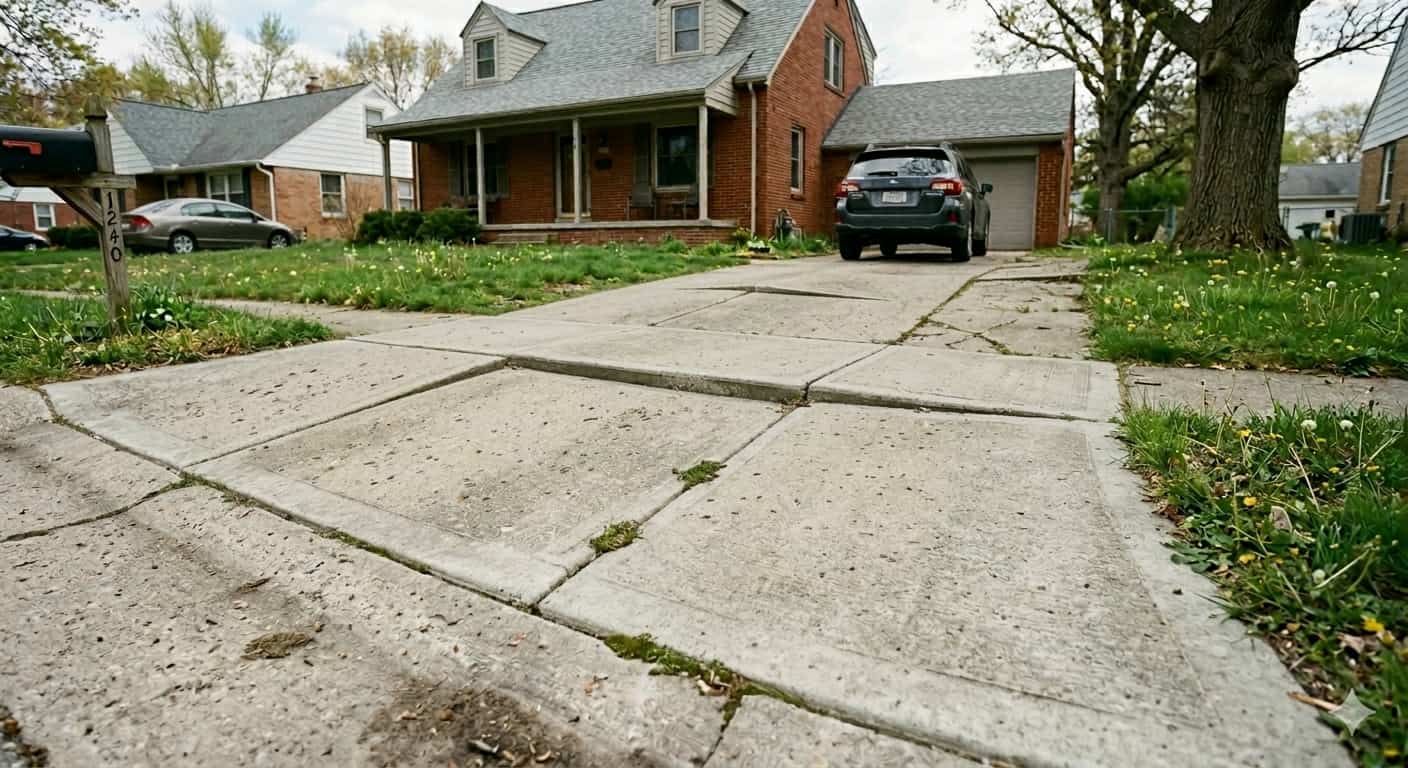
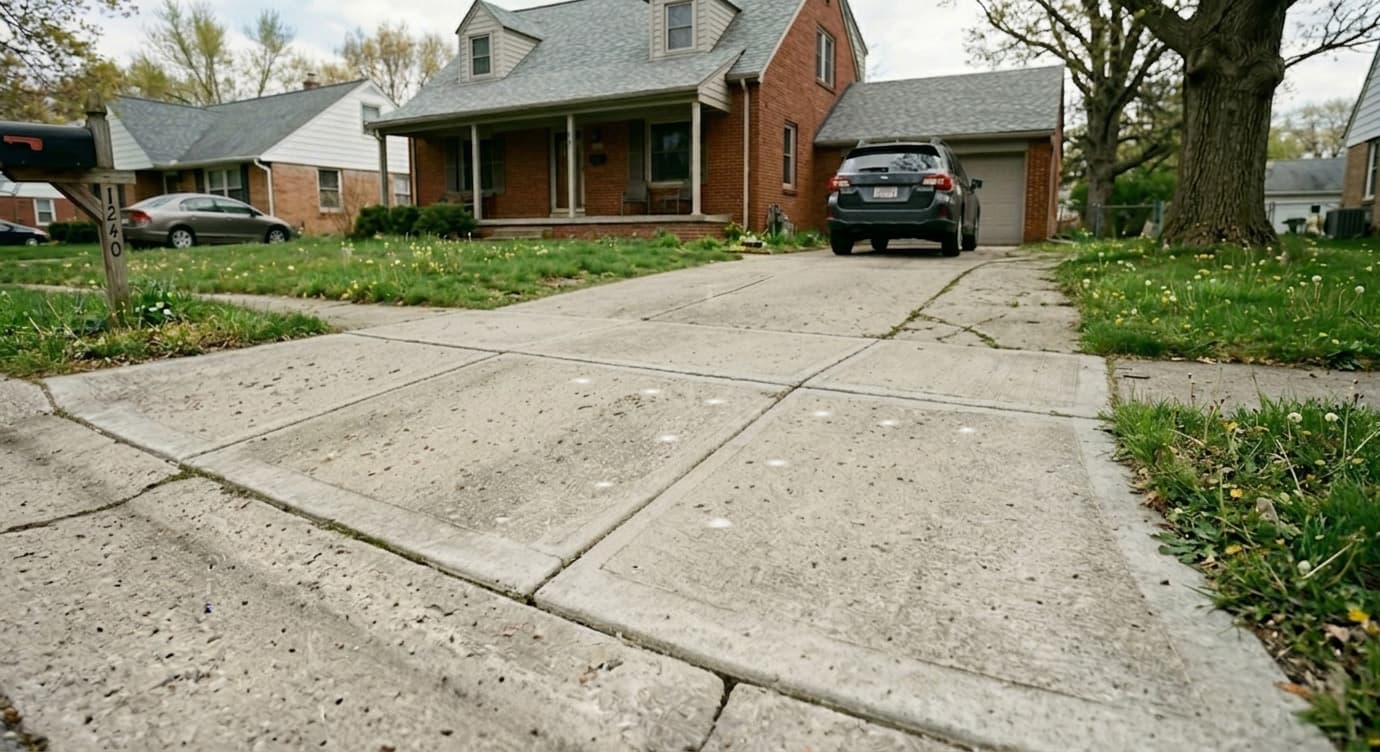
Sinking Driveway Repair in West Michigan
A driveway that drops, tilts, or pulls away from the garage apron isn't just an eyesore — it's a liability. Whether it's one section that's sunk two inches or several panels that have shifted out of plane, the fix is usually leveling, not replacement.
We lift and level sunken concrete driveways across Grand Rapids, Holland, Wyoming, Kentwood, Grandville, and the broader West Michigan area. Most driveway jobs are done in a few hours, and you're driving on it the same day.
Call for a free estimate — we'll tell you exactly what we're dealing with.
What's Happening Under Your Driveway
Concrete driveways don't sink because the concrete itself fails. They sink because the soil beneath them moves.
In Kent and Ottawa counties, the soils run sandy with pockets of clay — especially near the Grand River corridor. Sandy soil compacts unevenly and erodes easily when water gets beneath a slab. Over time, voids open up beneath the concrete. The slab bridges those voids until the weight becomes too great, and a section drops.
West Michigan's freeze-thaw cycle compounds this. Water migrates under the slab, freezes and expands, then thaws and retreats — often carrying soil particles with it. Over 130+ freeze-thaw cycles per year, those small movements accumulate into visible settlement.
New concrete placed over the same soil will follow the same path. Leveling the existing slab — and addressing drainage — gives you a lasting fix at a fraction of the cost.
How We Fix It
We drill small holes (typically 1.5–2 inches) through the settled slab, then inject material beneath it to fill voids and push the concrete back to grade. Once the slab is level, we patch the holes with cement. The whole process takes 2–4 hours on most driveways.
Mudjacking uses a cementitious slurry — cement, sand, and water mixed to a pressure-injectable consistency. It's been used for decades, is cost-effective, and works well on most residential driveways. Plan on 24 hours before putting a vehicle on it.
Polyurethane foam injection expands and cures within minutes of injection. Vehicles can typically return within an hour. Poly foam weighs far less than mudjacking material — about 2–4 lbs per cubic foot versus roughly 100 lbs — which makes it a better choice for driveways with poor drainage or areas prone to repeat settling.
We'll tell you which method makes more sense for your situation and why.
What Driveway Leveling Costs
Most residential driveway leveling jobs in West Michigan run $1,500–$3,500, depending on how many sections have settled, how much material is needed beneath them, and which injection method we use.
For context: replacing a typical 600-square-foot driveway in Grand Rapids currently runs $6,000–$9,000 for tear-out, hauling, and new pour. Leveling that same driveway — even at the high end — saves several thousand dollars and can be done in a single day without disrupting your landscaping, garage apron, or adjacent walkways.
We give free estimates after seeing the driveway. There's no formula we can apply over the phone — the amount of settlement and void space determines material cost, and we find that out on-site.
When Leveling Is the Right Call (and When It Isn't)
Leveling works when the concrete itself is structurally sound — when it's sunken but not crumbling, cracked badly, or deteriorated beyond what can hold an injection. We look for the following when we assess a driveway:
- Sections that have dropped uniformly (not shattered or broken into pieces)
- Cracks that are from settlement, not structural failure
- Concrete that's still at an age and condition where lifting makes economic sense
If the concrete is spalling heavily, has widespread structural cracking, or is simply too deteriorated to repair, we'll tell you that and recommend replacement instead. We'd rather lose a job than sell you a service that won't hold.